
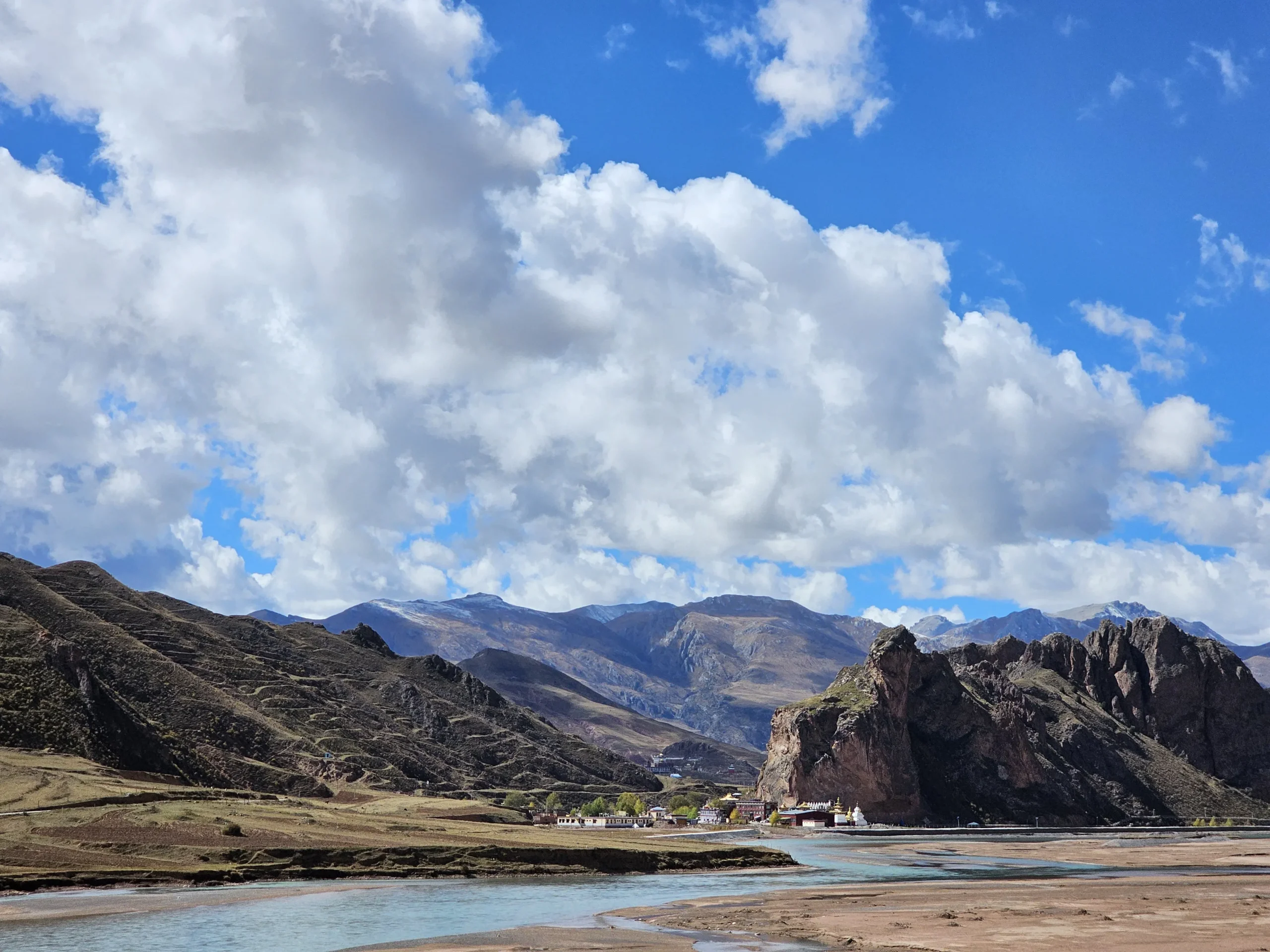
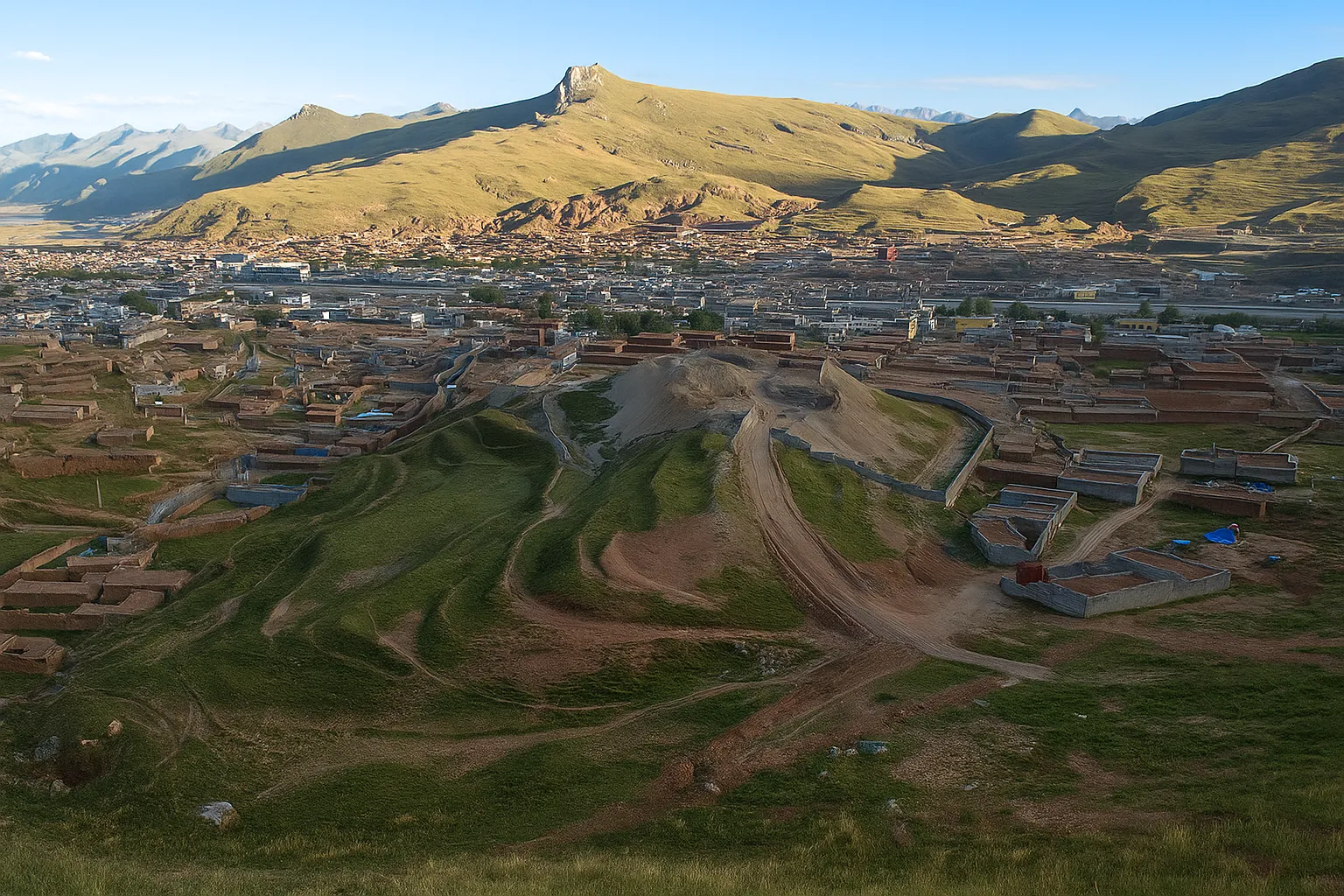
Dhonggar Palri Monastery was originally founded in the early 16th century by Karma Rangyur—recognised as one of His Holiness Tulku Karma Trinley Thubten Chöje Gyaltsen Rinpoche’s previous incarnations. Once under the domain of the King of Nangqên, the monastery stood gracefully upon the hillside east of the auspicious Dhonggar Mountain in Xiangda Township, bearing a history of more than five centuries. During the tenure of the realised master Karma Rangyur, it entered its golden age, flourishing as a vibrant centre of Dharma activity. Through the dedication of successive generations of abbots and masters, its sacred lineage continued unbroken. Yet, during the Cultural Revolution, this precious sanctuary was destroyed, reduced to ruins, and left without support. From the era of religious re-opening until 1999, only remnants of its former glory remained, while the spiritual masters of the region and the local lay community prayed fervently for its revival.
Dhonggar Palri Monastery was originally founded in the early 16th century by Karma Rangyur—recognised as one of His Holiness Tulku Karma Trinley Thubten Chöje Gyaltsen Rinpoche’s previous incarnations. Once under the domain of the King of Nangqên, the monastery stood gracefully upon the hillside east of the auspicious Dhonggar Mountain in Xiangda Township, bearing a history of more than five centuries. During the tenure of the realised master Karma Rangyur, it entered its golden age, flourishing as a vibrant centre of Dharma activity. Through the dedication of successive generations of abbots and masters, its sacred lineage continued unbroken. However, during the Cultural Revolution, this precious sanctuary was destroyed, reduced to ruins, and left without support. From the era of religious re-opening until 1999, only remnants of its former glory remained, while the spiritual masters of the region and the local lay community prayed fervently for its revival.
From the earliest years of his life, Gyaltsen Rinpoche’s destiny was intimately tied to this vision of renewal. At no more than five years old, before his recognition as a tulku, his parents brought him to a Tibetan master renowned for divination. Gazing into the divination mirror, the master beheld behind the young child countless majestic, radiant, golden edifices—though at that time, their meaning remained unclear. As young Gyaltsen Rinpoche grew, these early signs were affirmed by many great masters—including H.H. Kyabje Trulshik (Ngawang Chökyi Lodrö) Rinpoche, H.H. Drupön Dechen Rinpoche, H.H. the 18th Dülmo Chojé Rinpoche, and H.H. Chödrak Saljey Rinpoche—who not only recognised him as a Tulku Rinpoche but also foretold that he would accomplish great works for the welfare of beings.
Yet, even apart from these blessings and prophecies, Gyaltsen Rinpoche had long carried within his heart a profound aspiration to establish a monastery. This arose from his boundless compassion and devotion to create a sacred vessel of Dharma activity for the benefit of countless beings. Through his own diligent practice and innumerable blessings from his realised teachers and mentors, Gyaltse Rinpoche often beheld luminous visions of the Kālachakra in his meditations, with a vast and radiant mandala at its centre. These visions were divine affirmations, that Gyaltsen Rinpoche’s aspirations to build a monastery would manifest.
The Kālachakra and mandala in Gyaltsen Rinpoche’s visions turned out to be deeply intertwined with the sacred legacy of Padmasambhava. On the tenth day of the Monkey month in the Wood Monkey Year of 864, Padmasambhava journeyed to Camaradvipa. On the summit of the Copper-Coloured Mountain, he subdued the king of the rakshasas, the fierce demon Raksha Tötreng, and assumed his form. By this act, he transformed the perilous realm of cannibals into a supreme nirmanakaya where he now dwells—Zangdok Palri, the Glorious Copper-Coloured Mountain, manifesting his extraordinary abode the Lotus Light Palace (Pema Ö) atop its central peak. Through Padmasambhava’s blessings, that once treacherous domain became a realm of realisation where the tantric teachings continue to flourish. To this day, abiding in his luminous form beyond birth and death, Padmasambhava ceaselessly turns the wheel of Dharma, guiding and liberating countless beings. His emanations appear in the human realm time and again, empowered by his blessings, to ensure the ongoing protection and liberation of all.
These inner visions, together with the prophecies of accomplished masters, strengthened his resolve to manifest a reflection of Zangdok Palri. In seeking the perfect site for his monastery, Gyaltsen Rinpoche recognised Dhonggar Mountain as especially auspicious. The local laypeople named it “Dhonggar” (literally “white conch shell”) because of its striking resemblance to a white conch. This sacred shell is one of the Eight Auspicious Symbols of Tibetan Buddhism, its significance reaching back to the days right after the Buddha’s enlightenment.
Having realised the profound and tranquil dharmata beyond all conceptual elaboration, the Buddha at first resolved to remain in meditation, believing no one could grasp his realisation. After forty-nine days, an emanation of a bodhisattva—the god Indra, appeared before the Buddha and offered a rare right-spiralling white conch shell (most spiral to the left). This sacred gift was a plea for the Buddha to share his awakening. In response to this first offering, the Buddha resolved to turn the Wheel of Dharma, setting his teachings in motion. The conch shell then became the symbol of the far-reaching proclamation of the Buddha’s teachings. Moreover, its resonant sound symbolises the melodious and all-pervading nature of the Dharma, awakening beings from the slumber of ignorance. Traditionally, it is sounded on auspicious occasions to both announce and invite the deities as well as other sentient beings to participate in.
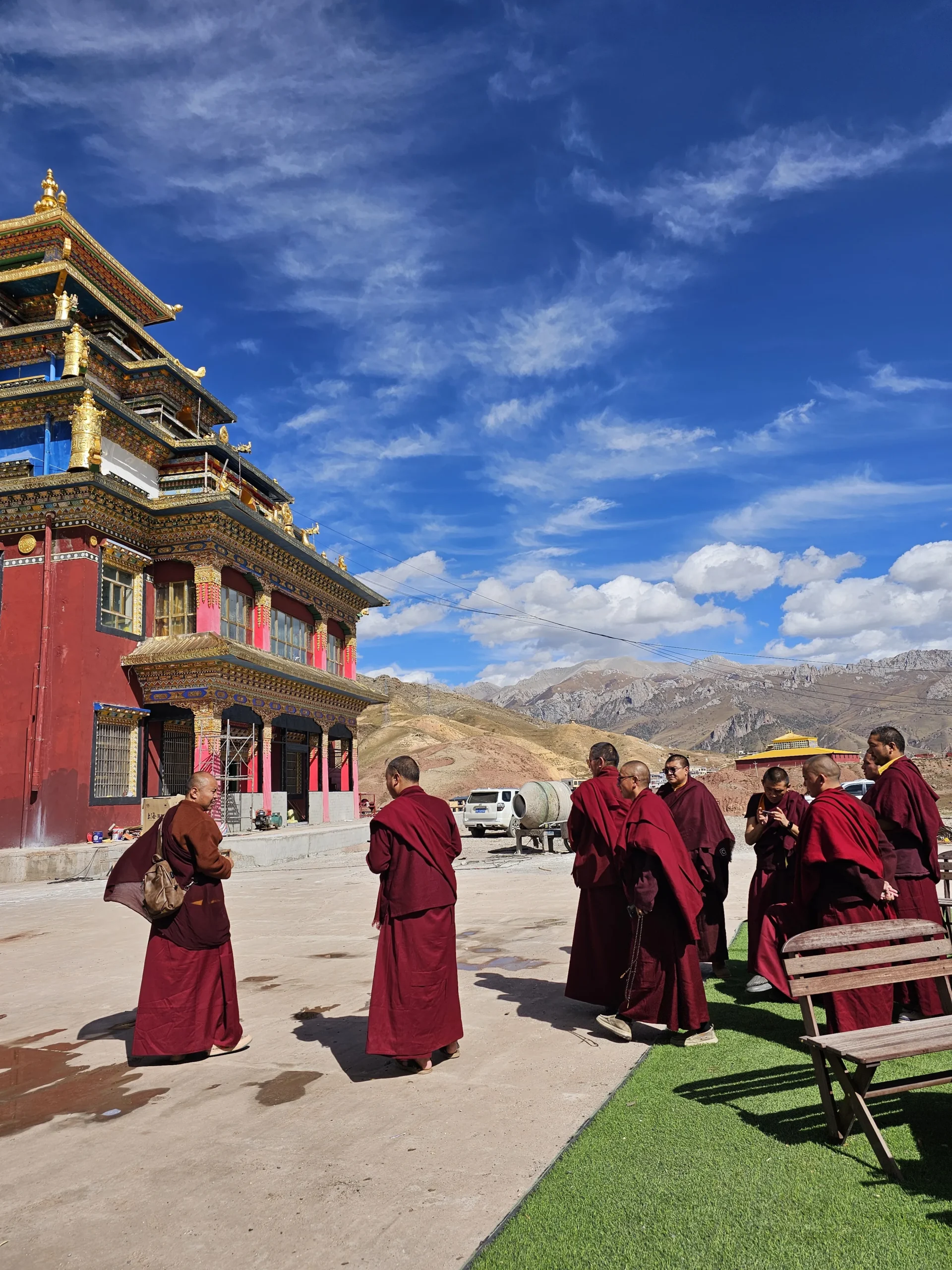
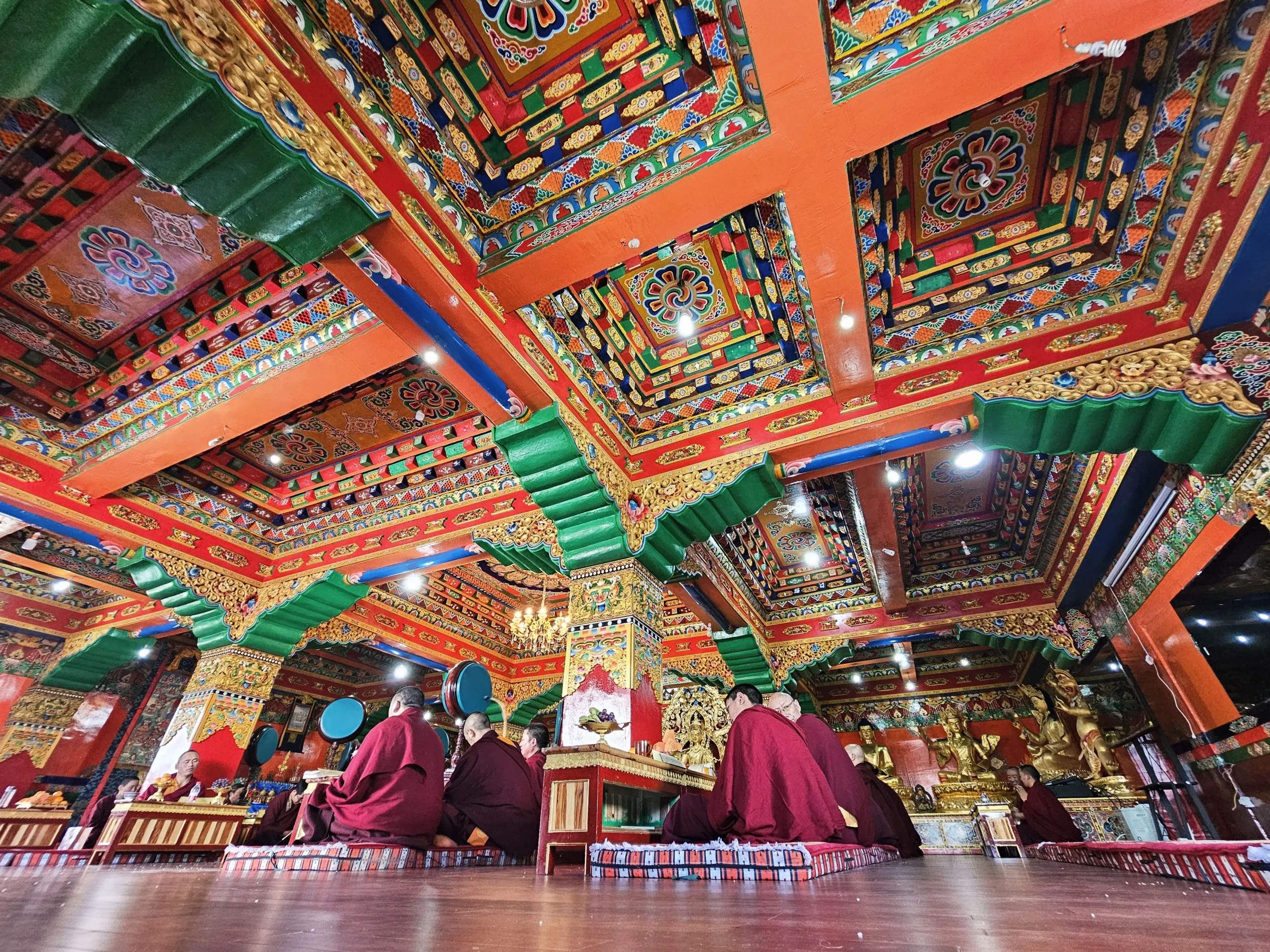
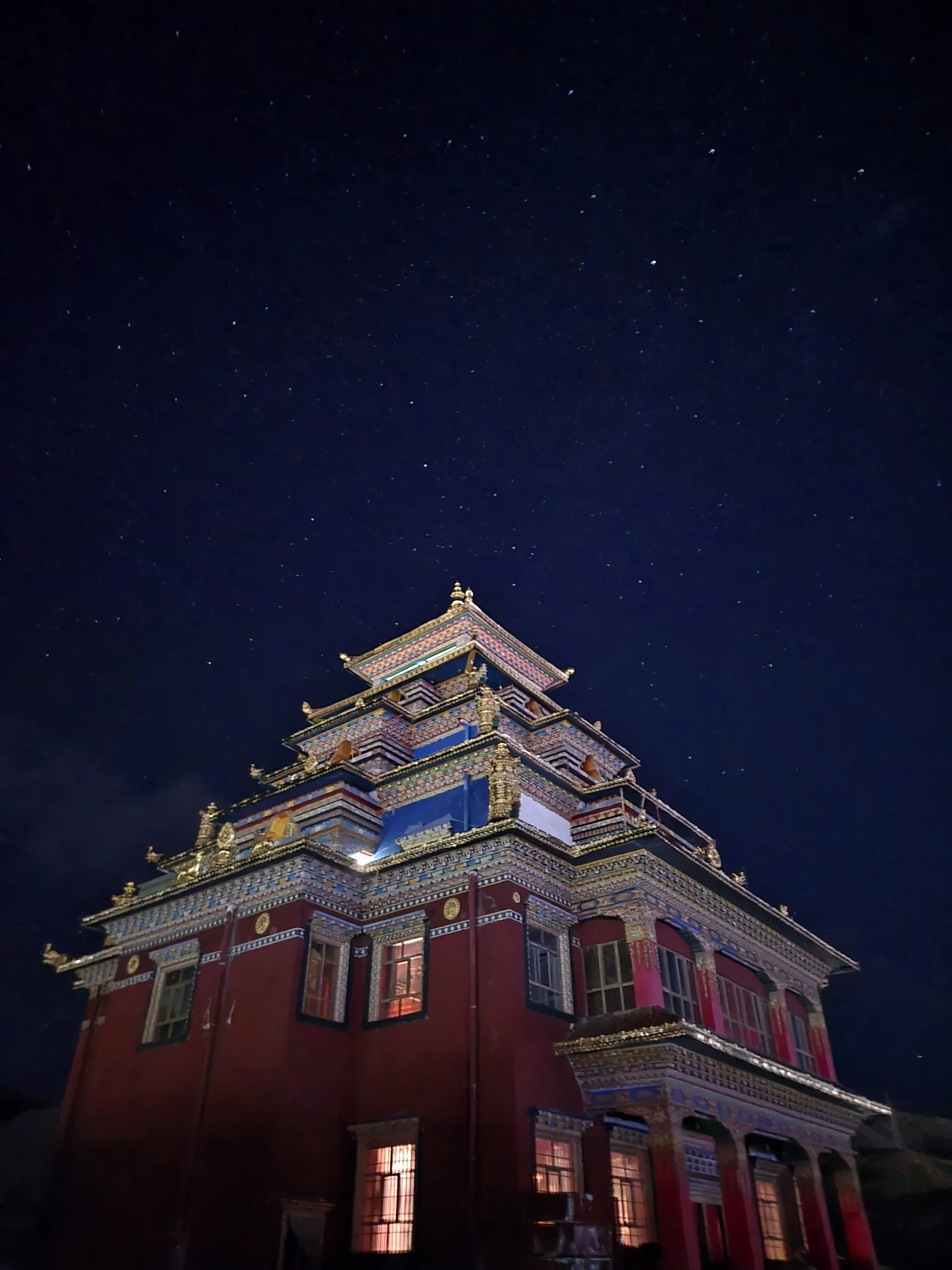
In 1999, after years of tireless effort and the generous support of his devoted disciples, Gyaltsen Rinpoche was able to acquire a modest parcel of land upon the summit of Dhonggar Mountain. This marked the foundational step in what would become the vast and unforeseen magnitude of Dhonggar Palri Monastery. The following year, construction officially commenced. Even before its walls began to rise, the site became alive with Dharma activity. Teachings, rituals, and gatherings were held beneath traditional Tibetan tents pitched around the construction ground. Over the years, the monastery gradually emerged, and in time, it stood resplendent as a six-story copper-coloured palace—a reflection of the Glorious Copper-Coloured Mountain (Zangdok Palri) itself.
Each level of the monastery carries a profound significance, enshrining the enlightened forms of buddhas and masters who embody the depth and breadth of the Dharma.
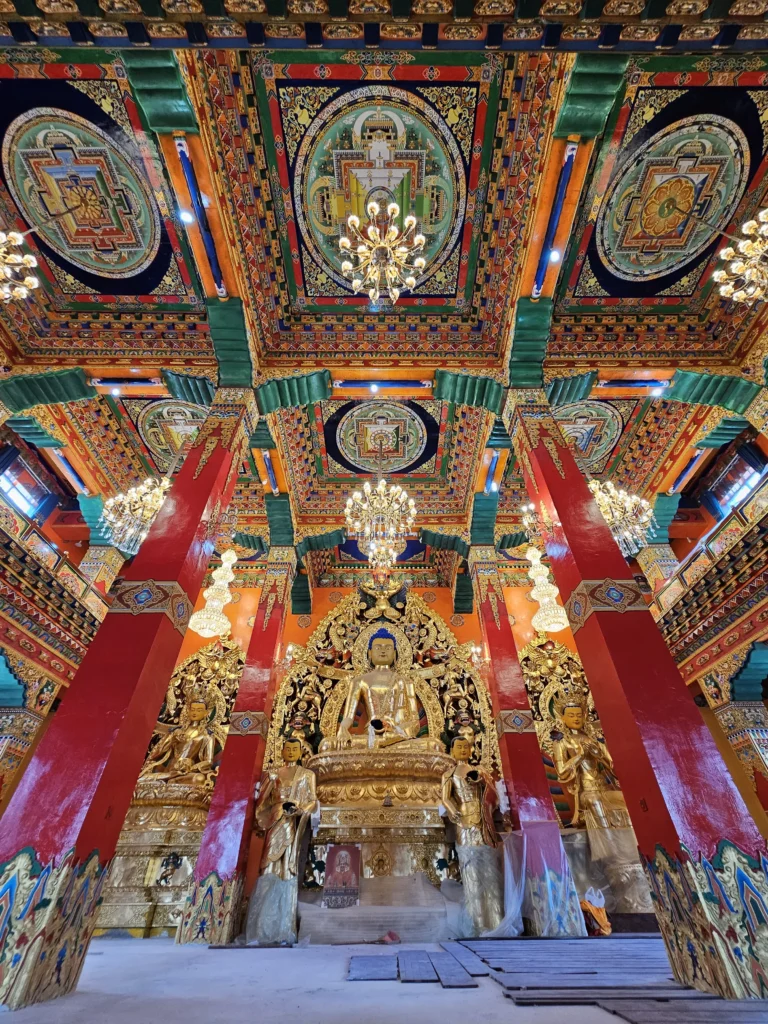
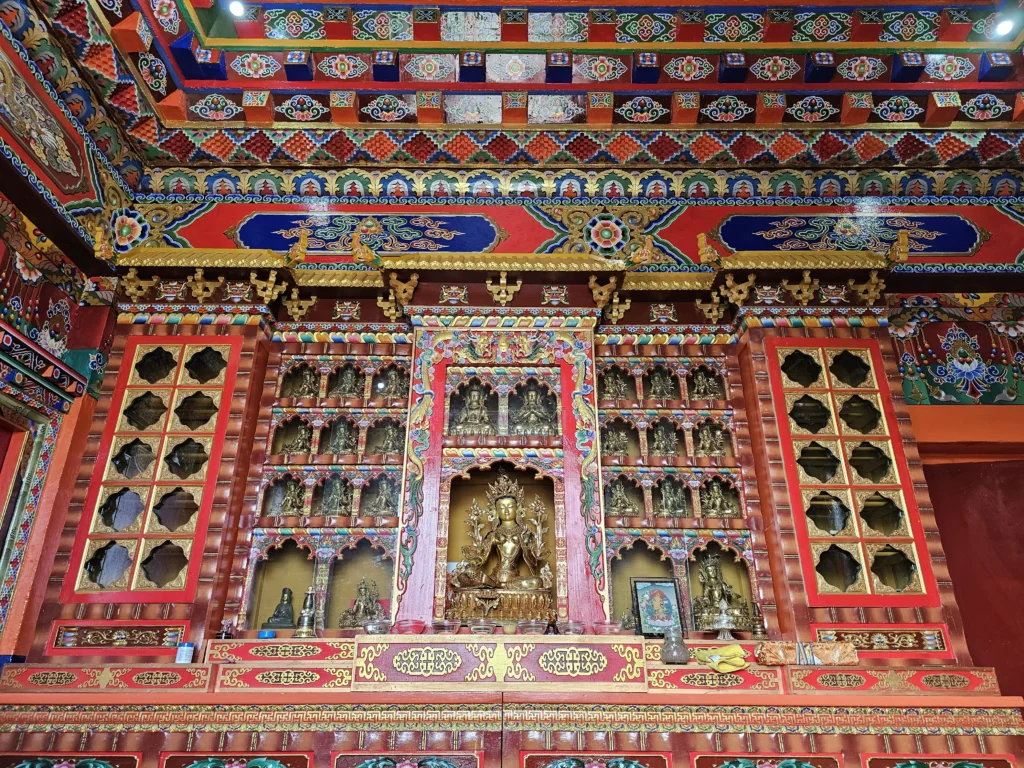
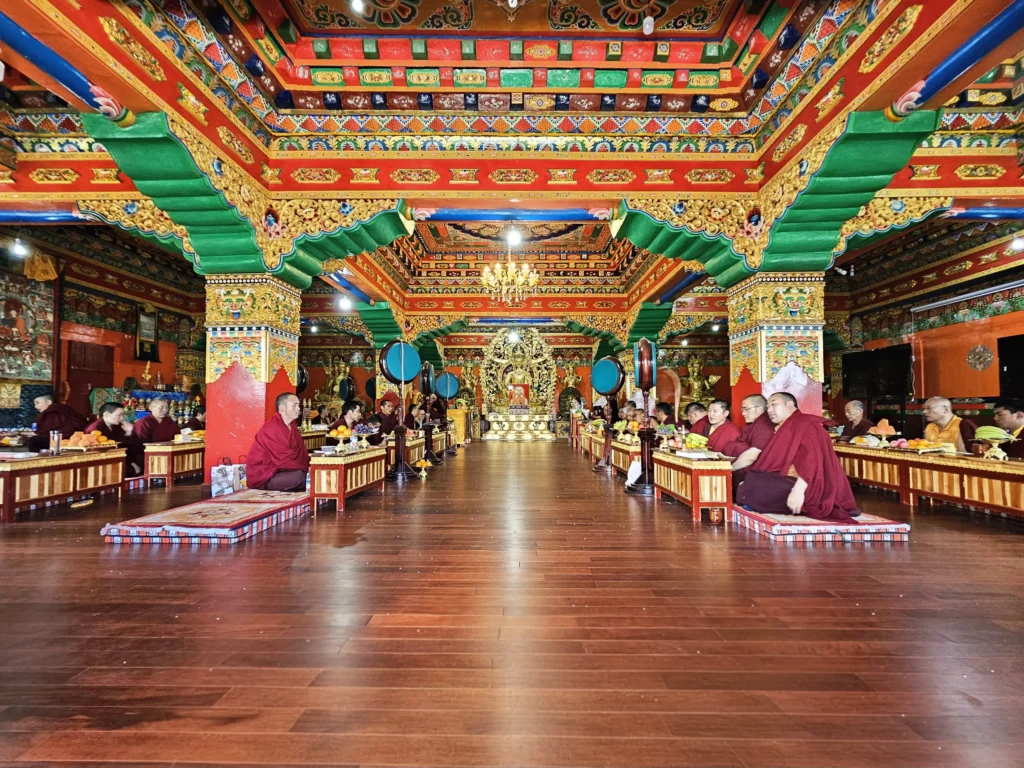
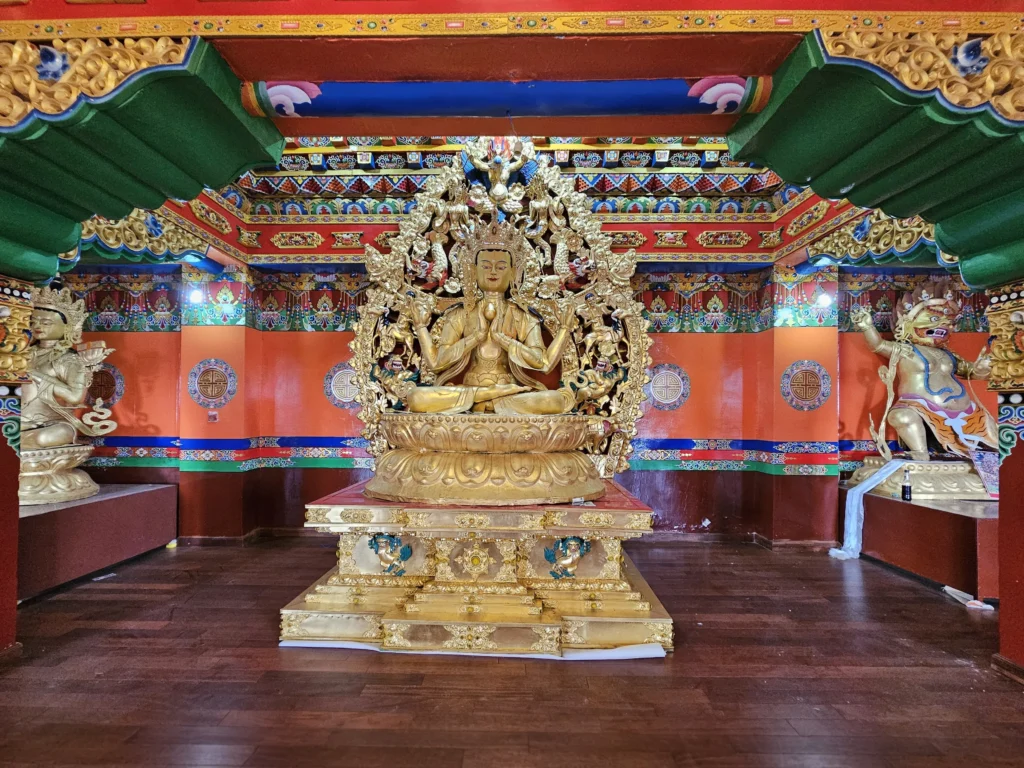
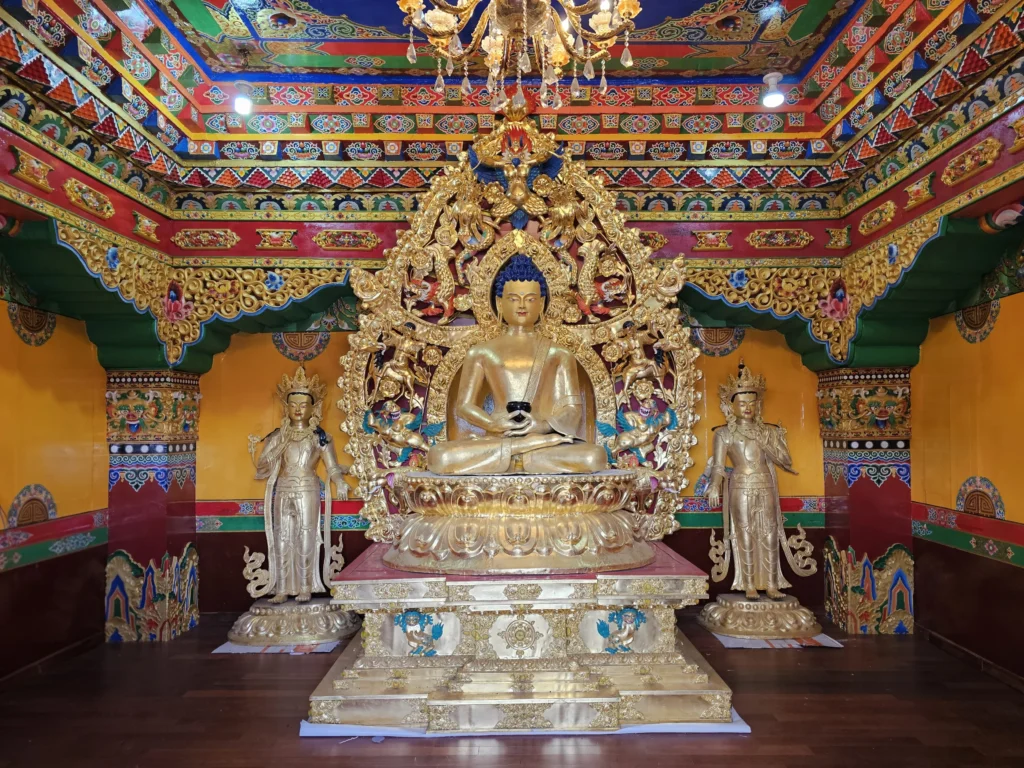
The sixth and highest floor is crowned with the sacred image of Vajradhara, the primordial buddha and source of all tantric lineages, signifying the monastery’s highest aspiration—to preserve and transmit the essence of awakened mind.
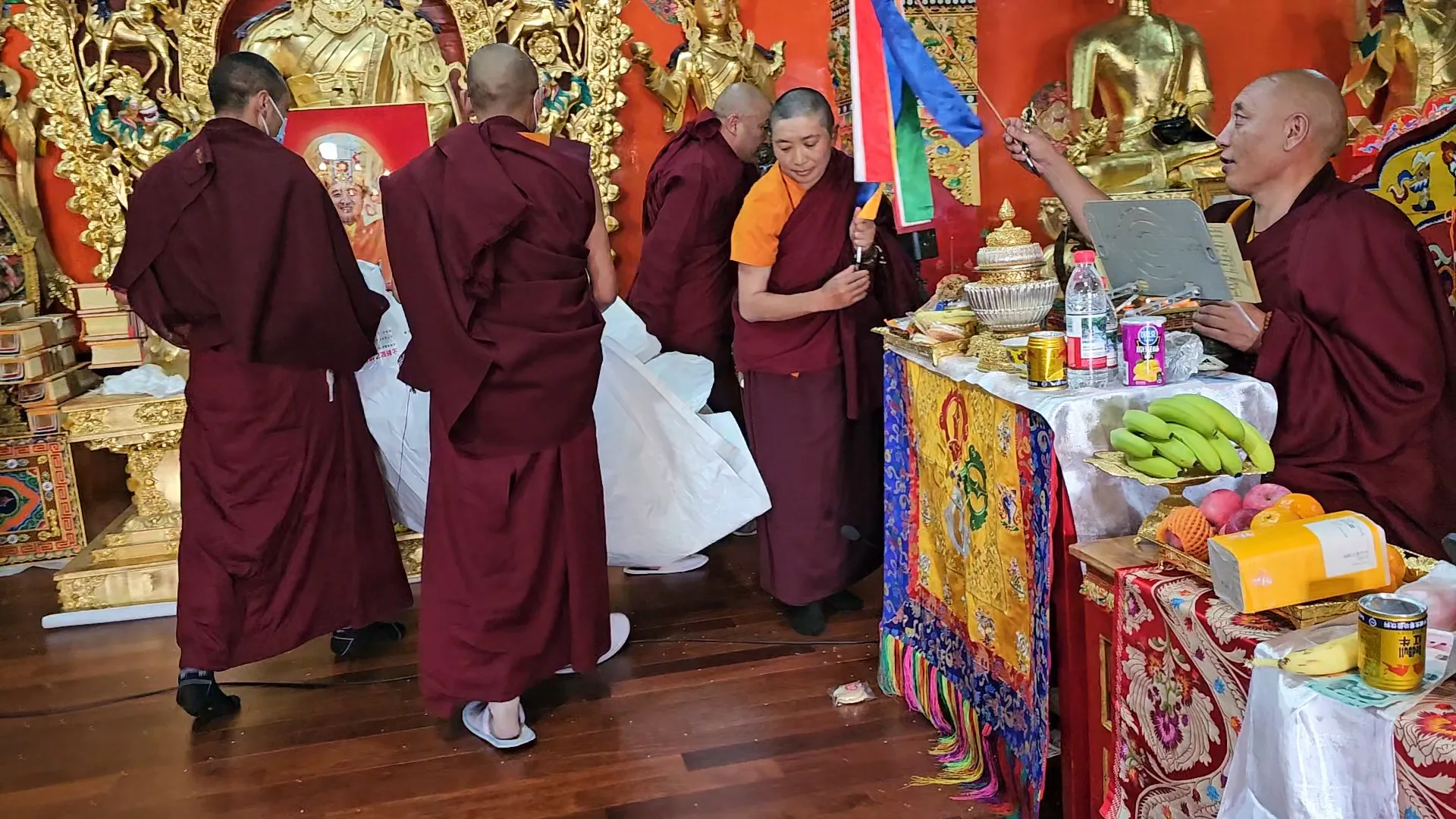
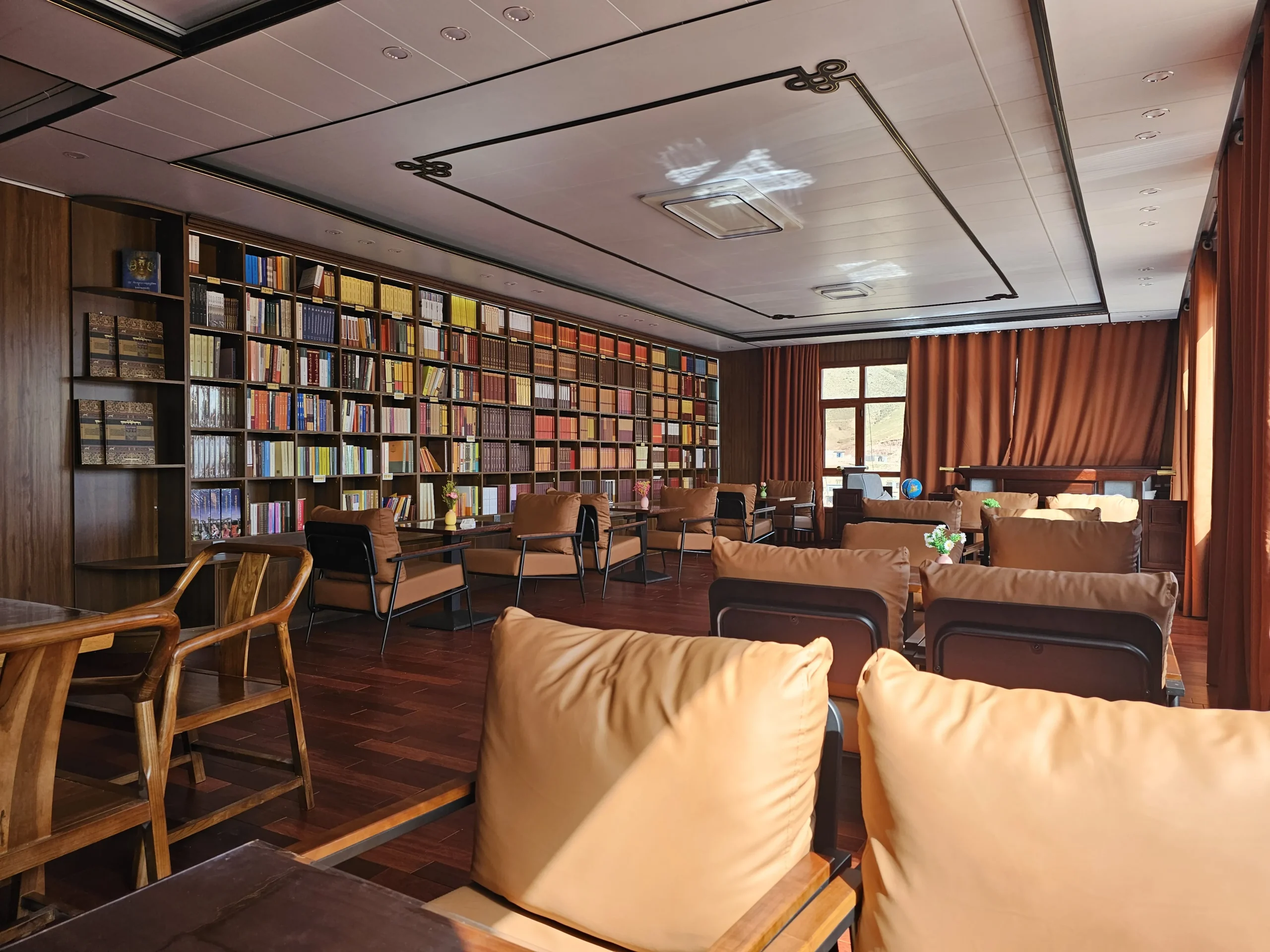
To support the life and practice of its monastic community, a dedicated residential complex was constructed on the western side of the monastery. This facility comprises 48 rooms across three stories, complete with bathrooms, laundry space, and a spacious dining hall connected to a commercial kitchen capable of serving over 500 meals. These provisions ensure the monastery can host large prayer ceremonies, welcoming monks from surrounding regions along with lay devotees who gather for practice and offerings. Behind the main temple, a standalone library and a modest non-profit general store were also established. The growing library, in particular, serves as a treasury of Dharma knowledge, supporting both resident monks and visiting practitioners in their studies.
Over the years, Dhonggar Palri Monastery has been graced by the presence of many venerable masters who have offered their blessings and encouragement upon seeing its progress. Among them are 18th Dülmo Chöjé Rinpoche, the 5th Khamdzor Rinpoche, Pema Lodrö Rinpoche, Dabzang Rinpoche, Sangye Tenzin Rinpoche, Kunzang Rinpoche, Khenpo Jigme Dzugtsem, Khenpo Chöpe, Khenpo Yishi Chereng, Lama Peyang, and Tulku Lungtok Rinpoche. Their visits stand as living testimony to the monastery’s importance as a seat of Dharma and a place of great blessing.
What began as a humble aspiration has now unfolded into a Dharma site spanning over three hectares. For more than two decades, Dhonggar Palri Monastery has remained a sanctuary of Dharma practice, study, and realisation—a place where lineage blessings, timeless aspirations, and the devotion of the faithful converge. As the copper-coloured palace rises above Dhonggar Mountain, it does not merely stand in stone and bronze, but as a living mandala of awakened activity, turning the wheel of Dharma ceaselessly for the benefit of all beings, now and for generations yet to come.